Most drawings that reach us are perfectly manufacturable. The ones that cause delays usually fail on small details — a hole slightly too small for the material thickness, a slot narrower than the kerf, a bend line too close to an edge. None of these are hard to fix at design stage, and all of them are expensive to fix afterwards.
Minimum hole diameter
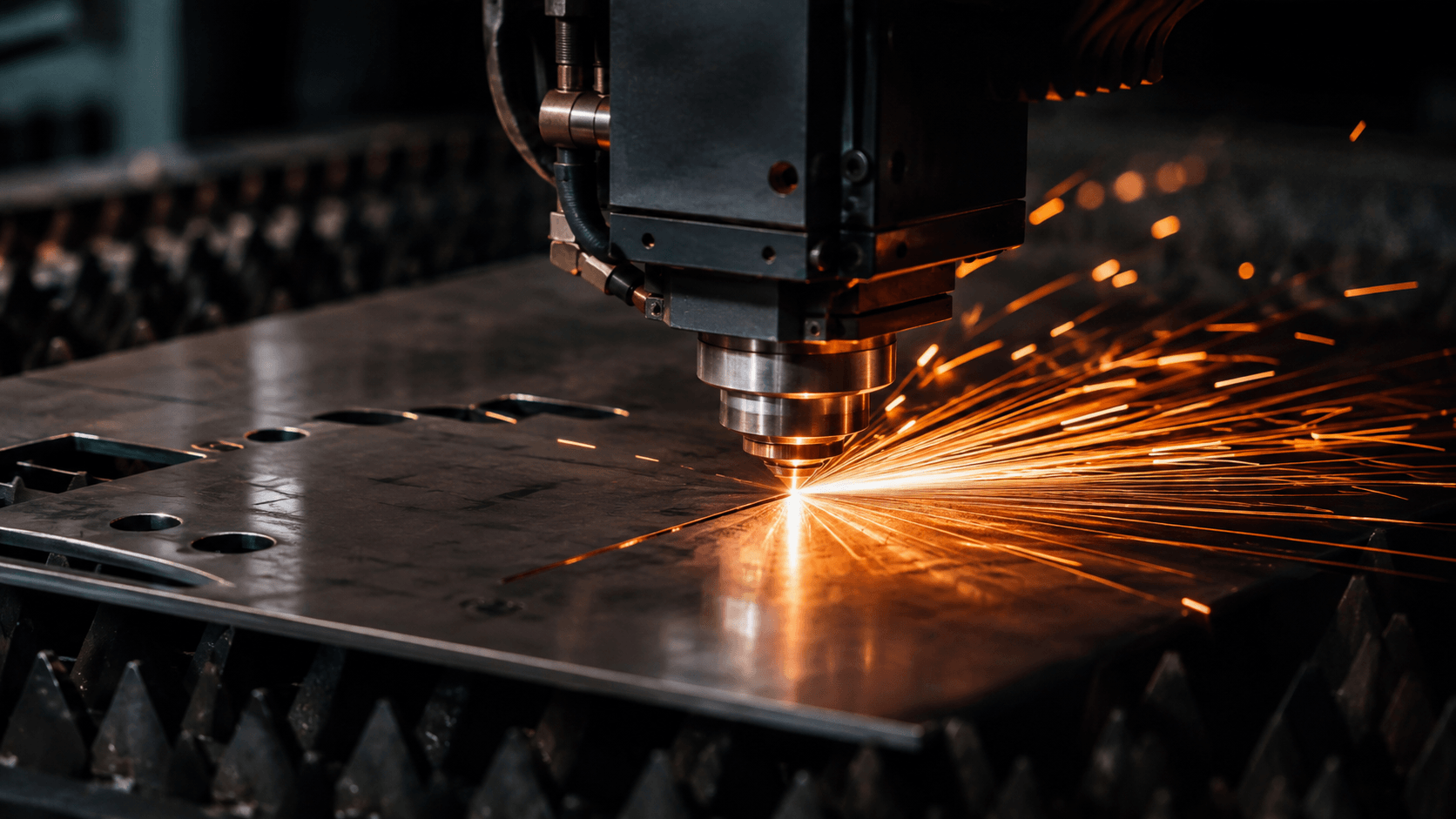
As a working rule, the smallest hole a fiber laser can cut cleanly is roughly equal to the material thickness. On 3 mm mild steel, a 3 mm hole is comfortable; a 1.5 mm hole is not. Below that ratio the pierce takes longer than the cut, the edge tapers, and on thicker plate the hole can close up entirely.
If your design genuinely needs a smaller hole, tell us at enquiry stage. Drilling or punching as a secondary operation is often cheaper than fighting the laser for it.
Slots, tabs and thin webs
The same ratio applies to narrow features. A slot should be at least as wide as the material is thick, and any web left between two cut features should be at least twice the thickness. Thin webs heat up, distort, and in the worst case drop out of the nest before the sheet is finished.
- Minimum hole diameter — roughly 1× material thickness
- Minimum slot width — roughly 1× material thickness
- Minimum web between features — roughly 2× material thickness
- Hole to bend line — at least 2.5× thickness plus the bend radius
The cheapest revision is the one made before the nest is generated. A five-minute conversation at enquiry stage routinely saves a week of rework.
Features near a bend
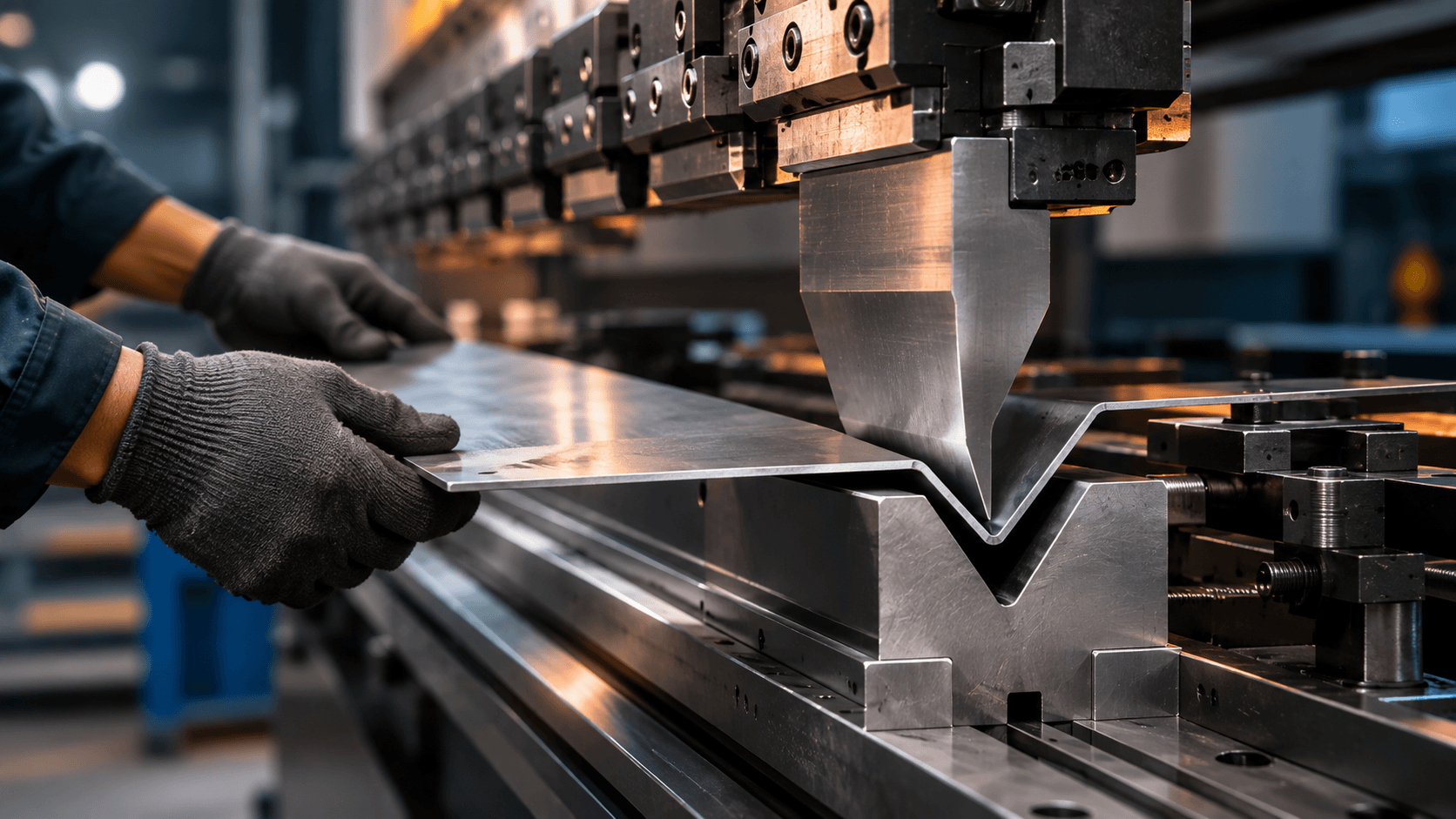
A hole placed too close to a bend line will deform as the metal stretches around the radius — it goes from round to oval, and no amount of care at the press brake recovers it. Keep the edge of any hole at least 2.5 times the material thickness away from the start of the bend, plus the inside bend radius itself.
Where a hole genuinely has to sit in the bend zone, one option is to cut it oversize and add a relief notch, then bring it to size after forming. We will flag this on the drawing review if we spot it.
Send the right files
DXF or DWG for flat profiles, STEP for 3D parts. A PDF is fine as a reference for tolerances and finish notes, but we cannot nest from it. If you only have a hand sketch, send it anyway — we would rather start a conversation than wait for a perfect drawing.
What happens next
Every enquiry goes through a manufacturability review before we quote. We check the points above, confirm material availability and grade, and come back either with a price or with a short list of things to resolve first. Prototypes and production runs go through the same process.
Have a drawing you want checked?
Send it over — we will review it for manufacturability and come back with a quote.
Get a Quote